Why It’s Unfair to Expect Every Dog to Be Calm Like a Service Dog
When “Any Dog Can Be Calm” Becomes a Harmful Lie
And Why It’s Okay If Your Dog Isn’t Calm in Every Situation
Many dog owners quietly carry a belief that if they just trained better, tried harder, or found the right program, their dog would eventually become calm in every situation.
That belief doesn’t come from nowhere.
It’s being sold.
Service dogs are often held up as the gold standard of behavior — calm, neutral, unbothered by the world — and owners are left with the impression that any dog could be like that if trained correctly.
That idea sounds hopeful.
It’s also wrong.
The Myth: “Any Dog Can Be Calm Like a Service Dog”
Marketing around dog training frequently implies that service-dog-level calm is achievable for all dogs through training alone.
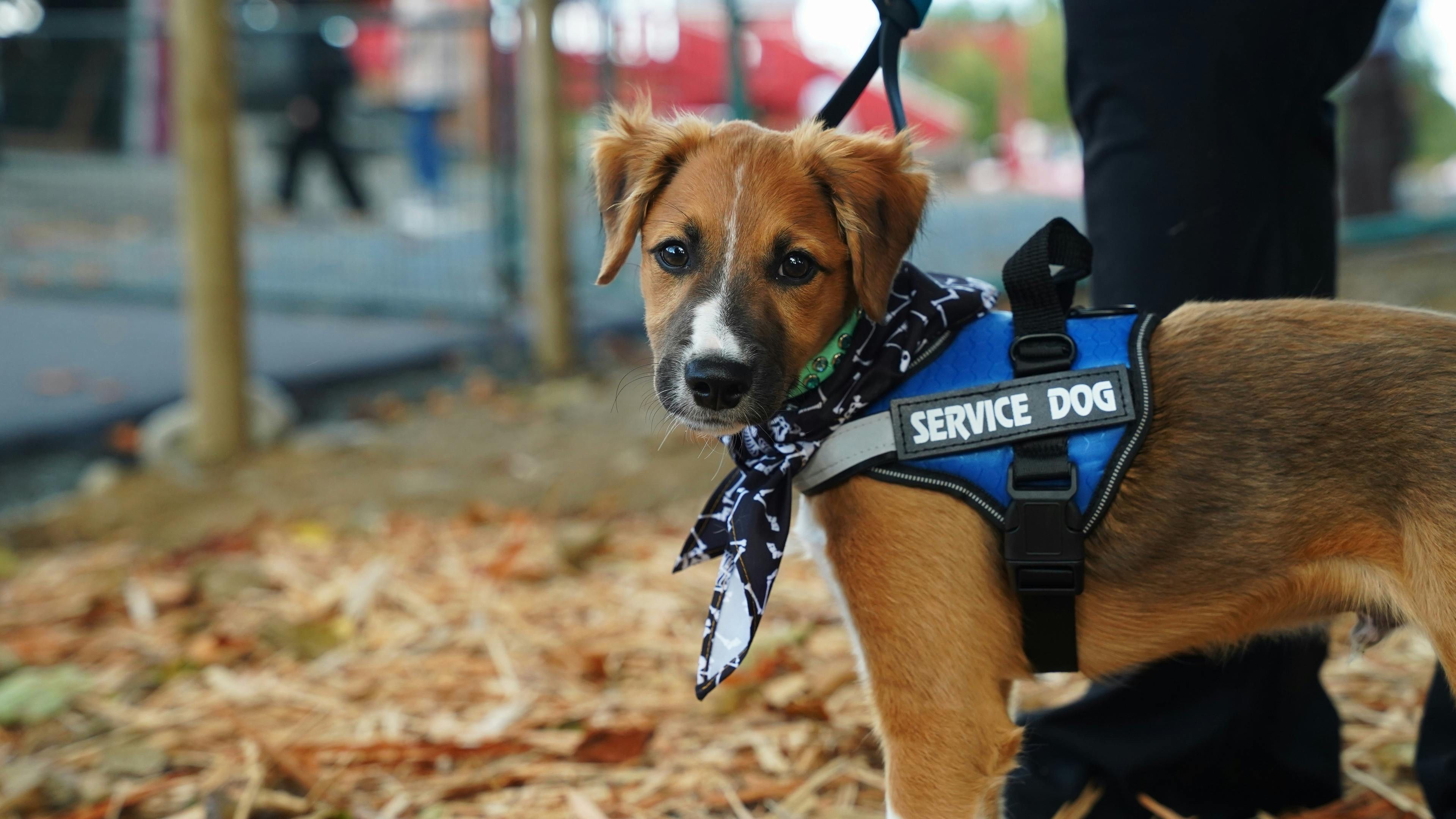
Here is an Ad from a popular dog training site:

Marketing language like this suggests that service-dog-level calm is something training can create in any dog.
This messaging isn’t necessarily malicious. But it quietly teaches something damaging:
If your dog isn’t calm like this, you’re doing something wrong.
That belief hurts dogs.
Service Dogs Are Chosen — Training Comes Second
Here’s the missing truth:
Service dogs are not trained into existence. They are chosen into possibility.
Before training ever begins, dogs are evaluated for traits that training cannot create, including:
-
Temperament stability
-
Drive levels
-
Environmental neutrality
-
Stress tolerance
-
Recovery speed after arousal
Many dogs — even very well-trained, wonderful dogs — never make it through service dog programs.
They fail, not because they are bad dogs, but because they are not suited for a very specific job.
These same dogs may excel in other areas where service dogs would fail.
Every dog has strengths and weaknesses.
Training refines what’s already there.
It does not install a nervous system.
What an Epic Service Dog Training Failure Actually Shows Us
This dog was being evaluated for service dog training. And he failed every test.
By service dog standards, this was an epic failure.
Pulling people out of wheelchairs.
Dragging wheelchairs across the floor.
Dragging a refrigerator instead of opening it.
These behaviors are incompatible with service dog work — but highly compatible with high-energy activities and jobs.
Here’s the critical distinction:
This dog failed at a job.
He did not fail at being a dog.
Side note: These are my favorite kind of dogs!
Job Failure Is Not Dog Failure
Service dog work demands a very narrow profile, including:
-
Lower, easily controlled prey drive
-
Natural calm confidence
-
Neutral responses to stimuli
This dog showed something else entirely:
-
High physical drive
-
Intense problem-solving
-
Persistence
-
Big, embodied responses
Those traits are not bad.
They are simply wrong for this job.
And that is exactly why screening exists.
Here is the same dog given an outlet he enjoys. :) These trainers are great. They are embracing, appreciating, and celebrating who he is, with humor and joy.
Why This Matters for Pet Dogs
Most pet dogs are far closer to this dog than to a polished service dog — and that’s normal.
They are often:
-
Expressive
-
Sensitive
-
Physical
-
Opinionated
When marketing suggests that any dog could be calm like a service dog “if trained correctly,” dogs like this become cautionary tales instead of what they really are:
proof that suitability matters.
Training didn’t fail this dog.
The expectation failed the dog.
Calm Is Not Obedience — It’s a State of Mind
One of the most important shifts owners can make is redefining calm.
Some dogs naturally live in a calm state of mind.
Others want — and need — excitement, activity, and stimulation.
That does not mean high-energy or driven dogs can never be calm like a service dog.
It means it is not fair to expect them to be calm all the time.
Calm is not:
-
A permanent state
-
A personality trait you can train into a dog
-
Suppression
-
Compliance
Calm is an emotional state.
Dogs can learn calm responses to certain situations.
Calm can be achieved after dogs are given appropriate outlets for their energy.
A dog who cannot be neutral everywhere is not doing training “wrong.”
A Better Standard for Dogs
Your dog does not need to be a service dog.
They do not need to be calm in every situation.
They need:
-
A life suited to their nervous system
-
Meaningful outlets
-
Clear communication
-
Fair guidance
-
Permission to be who they are
A successful dog is not one who performs calm everywhere.
A successful dog is one who is understood, guided, and appreciated.
Training dogs is as much about how we live as how we teach.